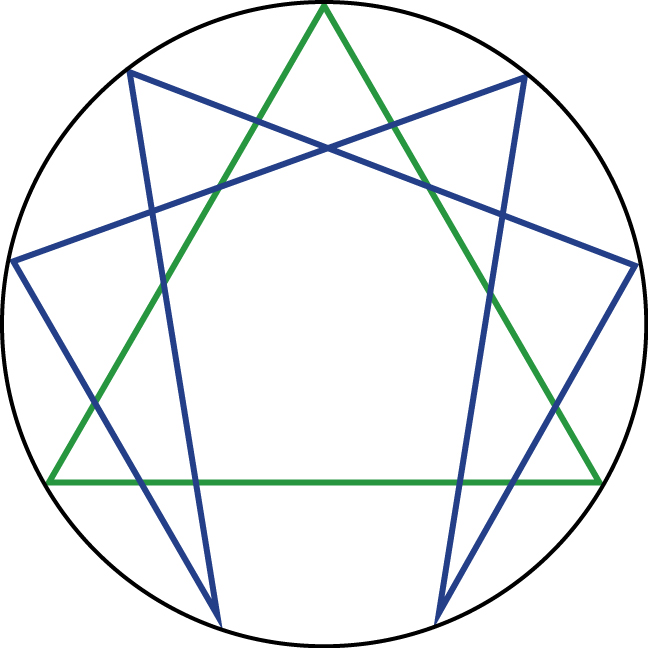
Preserving Enneagram Objective Knowledge for Future Generations
What we know about the Enneagram today comes from G.I. Gurdjieff and Oscar Ichazo public talks and speeches, writings, and teachings that in turn these two men received through oral knowledge being passed down directly to them, their own internal higher knowing, and from the Enneagram symbol itself.
This simple knowledge, contained in the Enneagram symbol, that wholeness of the universe, evolution, and consciousness can be found in 3, 7, and 9 dates back thousands of years, and given the 350,000 years of homo sapiens, tens of thousands of years is objectively conceivable.
Written records of the study of nine patterns of ego fixations or personality begin to show up in the early Egyptian, Greek, and Persian cultures as internal and external observations on virtues and vices. Those philosophers sought to understand societal roles and the characteristics of good leaders.
Around 300-400 CE, writings from within the Catholic Church also refer to virtues (essence) and sins (personality). Undoubtedly, thousands or even hundreds of confessions would have revealed such patterns of inner consciousness. These patterns were recorded as 7, 8, and sometimes 9 sins or virtues. (See, for example, the writings of Raymond Llull, circa 300 CE). In 590 CE, Pope Gregory reduced these 9 sins to 7. And although it uses a different mathematical model, the Jewish Kabbalah similarly points to 10 attributes, or Sefirot. (This number is made up of 9 attributes, plus 1 for pure unity.)
A number representing distinct patterns of consciousness is not a recent phenomenon. That Homo sapiens has been around for 300,000 years, that writing and written records were possible 5,000 years ago, and that our mind was likely the greatest tool available, we cannot say for sure when the scientific discovery of the 9 patterns of consciousness were discovered. However, formal, written documentation of the Enneagram is first found in the early part of the 20th century, when three students of the Enneagram in particular formalized the oral teachings about the nature of reality and made it public. Let us examine those original sources.
Returning to the Original 20th C. Sources: The Three Men Who Brought the Enneagram Forward
Formal written documentation of the Enneagram began in the first part of the 20th Century. Now, in 2026, the ancient knowledge of the Enneagram, originally used as a tool for oral teaching about the nature of reality, can now be fully translated to mathematical structure which we will describe in Part 2.
For this three part article, we turned to the original sources from the 1900s, outlined in Figure 1.2.
Figure 1.2 Contemporary Excavations of Ancient Knowledge: Core Focus of Gurdjieff, Ichazo, and Naranjo Knowledge
| 1915, Moscow and 1922, Paris (G.I. Gurdjieff) The focus of Gurdjieff knowledge: • The Enneagram of Process, an objective science of the evolution of all of life, including consciousness • Knowledge introduced by G.I. Gurdjieff in Moscow, Russia in 1915 and in Fontainebleau-Paris, France in 1922 1970, Arica, Chile (Oscar Ichazo) The focus of Ichazo knowledge: •The Enneagram of Holy Ideas and Ego Fixations, objective lawful patterns of the content of consciousness, •Knowledge introduced by Oscar Ichazo, Arica, Chile to North Americans in 1970 1971, Berkeley, California (Claudio Naranjo) The focus of Naranjo knowledge: •The Enneagram of Personality, a contemporary synthesis of Gurdjieff’s 3 Types of Humans and Ichazo’s 9 Holy Ideas (9 patterns of wholeness), and 3 distorted instincts •Knowledge introduced by Claudio Naranjo in Berkeley, California in 1971 |
For decades, Gurdjieff had traveled throughout the Eastern Mediterranean and Central Asia. He sought and synthesized knowledge from sources that predated the modern world’s fragmentation of wisdom into separate disciplines. He was also keen on challenging Western sciences’ limited ability to objectively measure knowing that the observer changes the observed and instruments of measurement were and still are limited as are the conditions in which measurement takes place. Next, Gurdjieff crossed into Western Europe to verify the nature of human consciousness in thousands of seekers.
Oscar Ichazo devoted his life to verifying the integral philosophy he had received through both study and direct knowing, treating the Enneagram as one small component of a vast system.
Claudio Naranjo possessed the rare combination of mainstream academic credentials and esoteric experience, allowing him to serve as a translator between ancient philosophy and psychological science. As a psychiatrist interested in treating psychopathology, he carefully articulated the 9 lenses of subjective consciousness into character psychopathology.
G.I. Gurdjieff
An Armenia-Greek in Paris
(1877-1949)
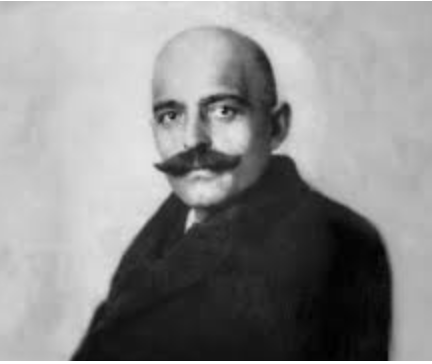
Gurdjieff came from a family and early childhood where the philosophy captured in the title of Ram Dass’ original work, Be Here Now wasn’t an aspirational spiritual teaching but ordinary reality where a more unified experience of existing in and with the universe was acknowledged. Gurdjieff grew up like any other child and only later realized how fortunate he had been to be raised with this awareness. He was the first to introduce the Enneagram symbol to Western Europe in the early 1900s. After years of teaching, verification, and writing, he died in Paris, France in 1949.
Born of Armenian and Greek heritage, George Ivanovič Gurdjieff grew up near the Caucasus Mountains in Armenia in a region where ancient traditions were acknowledged, where oral transmission of knowledge was mainstream, and where understanding required both intellectual knowledge and presence-based knowing through verification for oneself.
Gurdjeff Acquired His Knowledge Through:
- Ancient Oral Transmission in the Eastern Mediterranean and Central Asia
- The Sarmoung Brotherhood, a Sufi society that attempted to acquire esoteric knowledge that had been passed down from antiquity
- Direct verification for himself and with “Seekers of Truth” his first travel companions and later to those who sought him out
After thousands of years, why was the Enneagram publicly introduced to the West in the early 1900s. Many scholars of Gurdjieff agree that the introduction of the Enneagram symbol in the 20th century was specifically because of increasing fragmented subjectivity by which we are surrounded. Indeed Figure 1.3, reveals in Gurdjieff’s own words the nature of our modern day subjective world.
In Figure 1.3 you will find in Gurdjieff’s exact words the purpose of his three books, also called three series. In the forward to the third series, Gurdjieff states:
Figure 1.3 Gurdjieff Writings Each Introduced Using Gurdjieff’s Own Words
| Beelzebub’s Tales to His Grandson“…to achieve the destruction, in the consciousness and feelings of people, of deep rooted convictions which in my opinion are false and quite contradictory to reality.” Gurdjieff reveals his wish that humankind see themselves and to decode how Objective Science works. |  |
| Meetings With Remarkable Men“…to prove that there exist other ways of perceiving reality, and to indicate their direction.” Gurdjieff reveals his relationship to people and their journey to consciousness. | 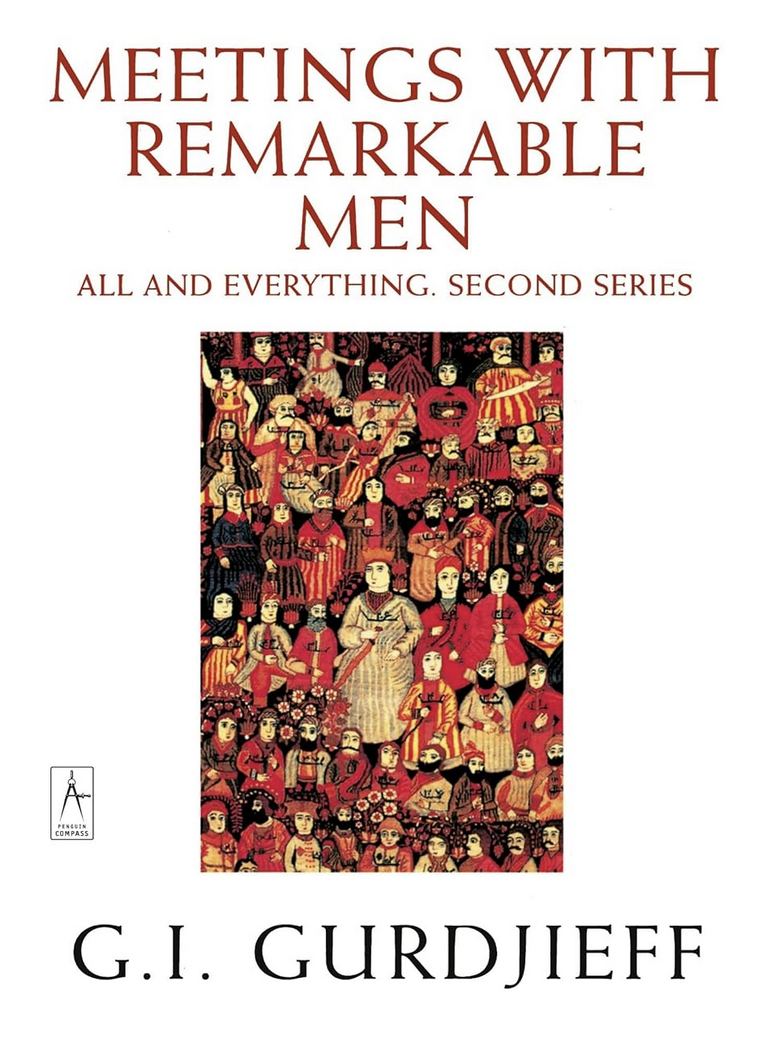 |
| Life is Real Only Then, When I Am“…to share the possibilities which I had discovered of touching reality and, if so desired, even merging with it.” Gurdjieff reveals his relationship to embodied consciousness and realization. | 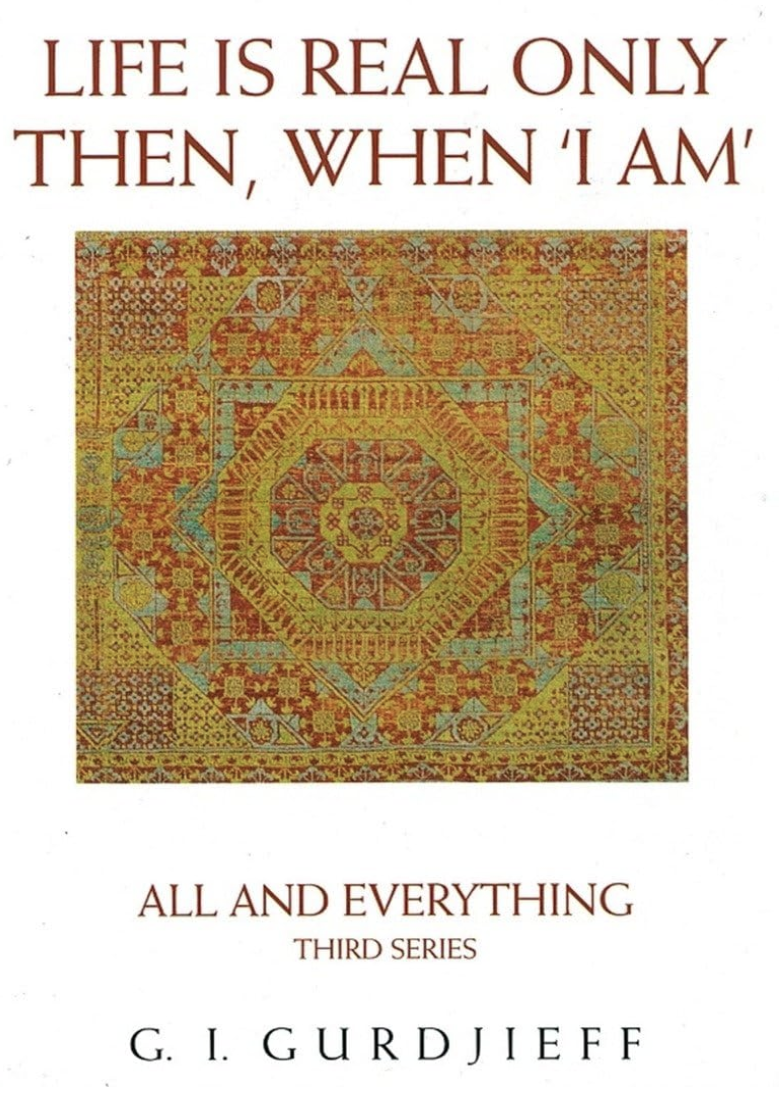 |
Because Gurdjieff’s three series are written intentionally to be decoded we also used and do recommend these three key secondary sources of Gurdjieff’ss writings (Figure 1.4).
Figure 1.4 Secondary Sources of Gurdjieff Writings
| P.D. Ouspensky (1878-1947), Moscow to London A contemporary student and colleague of Gurdjieff who took meticulous notes and in his works makes Gurdjieff’s teaching accessible. In Search of the Miraculous (first printing 1949) The Psychology of Man’s Possible Evolution (first printing 1950) Russell Smith (1949-2023), Ohio to Sanger Texas In 1993, Gurdjieff Scholar, Russell Smith, cracked the code on the Diatonic Octave, until that time, the law of process was fairly limited to such things as making a meal or writing a book. Smith’s scholarship now reveals how the Enneagram of Process is precisely tied to the mathematical structure of the smallest building blocks of the universe. Cosmic Secrets (Cracked the Code on how the Laws of 3 and 7 are structured in the Diatonic Octave, Chapter 39) Steven Wheeler (1957- ), North Hampshire, England In 2020, Gurdjieff and Objective Science Scholar, Steven Wheeler (also an author on this paper), launched a blog to decipher and communicate objective knowledge and reasoning based on the Diatonic Octave and Gurdjieff writings. Notes from a Small Village |
Oscar Ichazo
A Bolivian in Hana, Maui, Hawaii
(1931-2020)
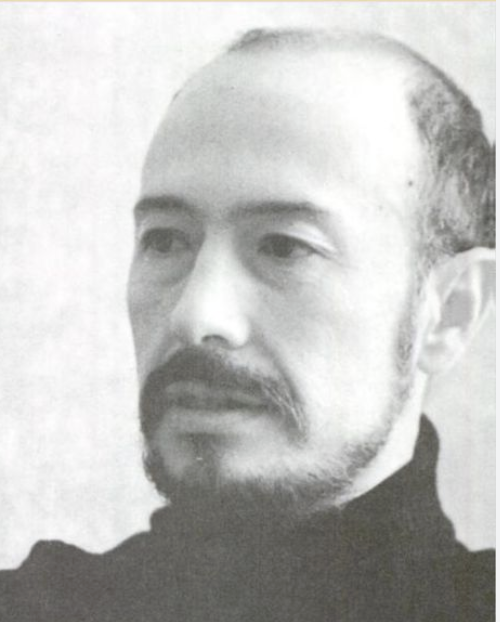
Oscar Ichazo was born in Roboré, Bolivia in 1931. He spent much of his life verifying an Integral Philosophy that came to him through both intensive study of what he called the Western Prophetic Tradition and his evolved consciousness which provided direct knowing. Ichazo’s verification extended to his internal states and to those of others who were immersed in his Integral Philosophy teachings through the Arica Institute he founded. After a lifetime of teaching, Ichazo died in Maui, Hawaii in 2020.
The Enneagram of Ego Fixations and Holy Ideas (whole objective patterns), for which Ichazo is known, represents only a fraction of his total teaching. His original vision included 108 enneagons, geometric diagrams showing how nine elements relate within various domains of knowledge of which the ego or personality system was one. Ichazo originally called the 9 types enneagons, and in Part 2 we will reveal the objective significance of that.
He did not set out to create a personality typology for the self-help market. He was mapping the structure of reality itself, and ego types emerged as one pattern among many within that larger structure.
Ichazo acquired his knowledge through:
- Study of The Western Prophetic Tradition (Egypt/Greece/Europe)
- Direct knowing through experiencing visions which Ichazo has referred to as an experience of the archangel Metatron, an angel of higher knowledge
- Many years dedicated to verifying the direct knowledge he received
- The Sarmoung Brotherhood
Figure 1.5 outlines the key sources of Oscar Ichazo’s knowledge about the Enneagram of Ego Fixations. The earliest written record (in the English language) of the 9 types we could locate include an interview from 1973 with Sam Keen in Psychology Today. This was reprinted in Interviews with Oscar Ichazo in 1982. The first written record (in the English language) we could locate of the 27 subtypes appears in a chapter in Transpersonal Psychologies published in 1975. The essay referring to the subtypes is titled The Arica Training (based on Ichazo’s 1970 teachings in Arica, Chile).
Figure 1.5 Ichazo Key Sources
| 1973: The first published record (English in North America) we could find referring to the 9 Enneagram fixations, ideas, passions, and virtues was a 1973 interview with Sam Keen in Psychology Today, reprinted in Interviews with Oscar Ichazo, published in 1982.) | 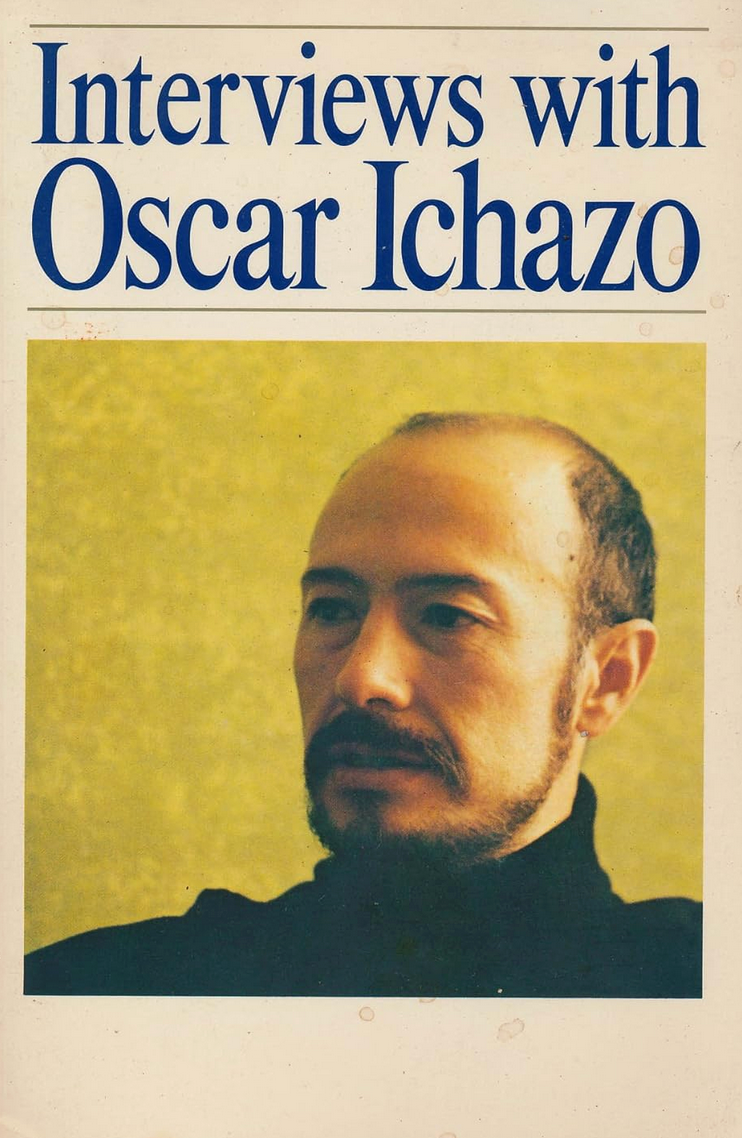 |
| 1975: The first published record (English in North America) we could find referring to the 27 Enneagram instinctual subtypes The Arica Training (which took place in 1970), described in an article by John Lilly, M.D. and Joseph Hart. The article describing the 1970 training was included in the 1975 Transpersonal Psychologies, Edited by Charles T. Tart. | 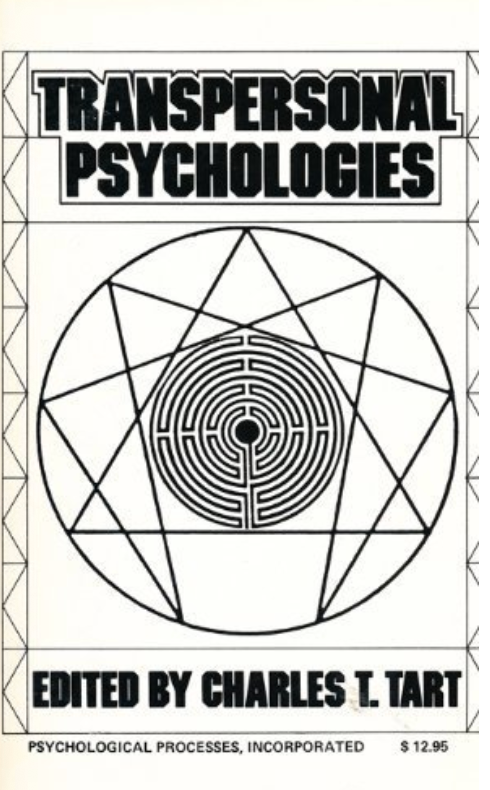 |
| 1981: A lecture given in 1981 at the Collegiate Theater, London, published in 1982 in Between Metaphysics and Protoanalysis. | 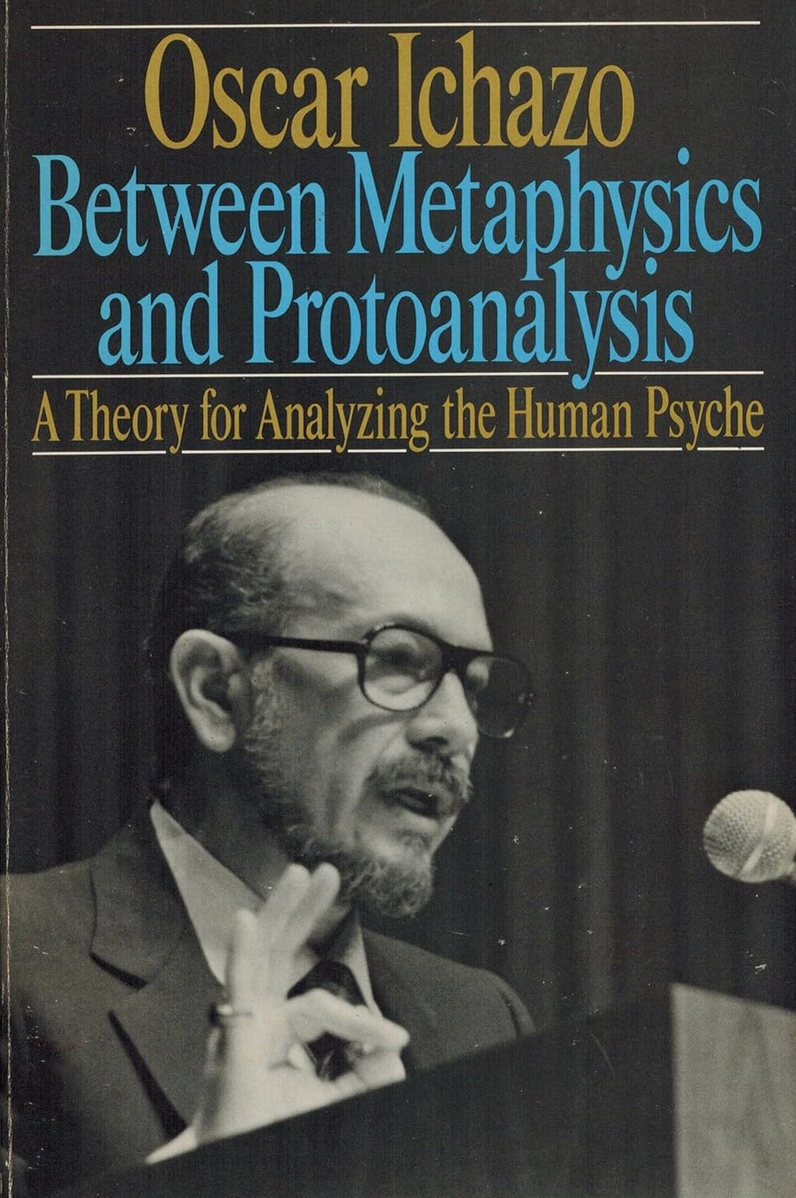 |
| 1993: An interview by Michael Goldberg, published in Metro News Santa Clara as “Enneagram Wars: Oscar Ichazo Breaks His Silence About a Powerful Nine-Pointed Symbol and the Battle to Control It” | 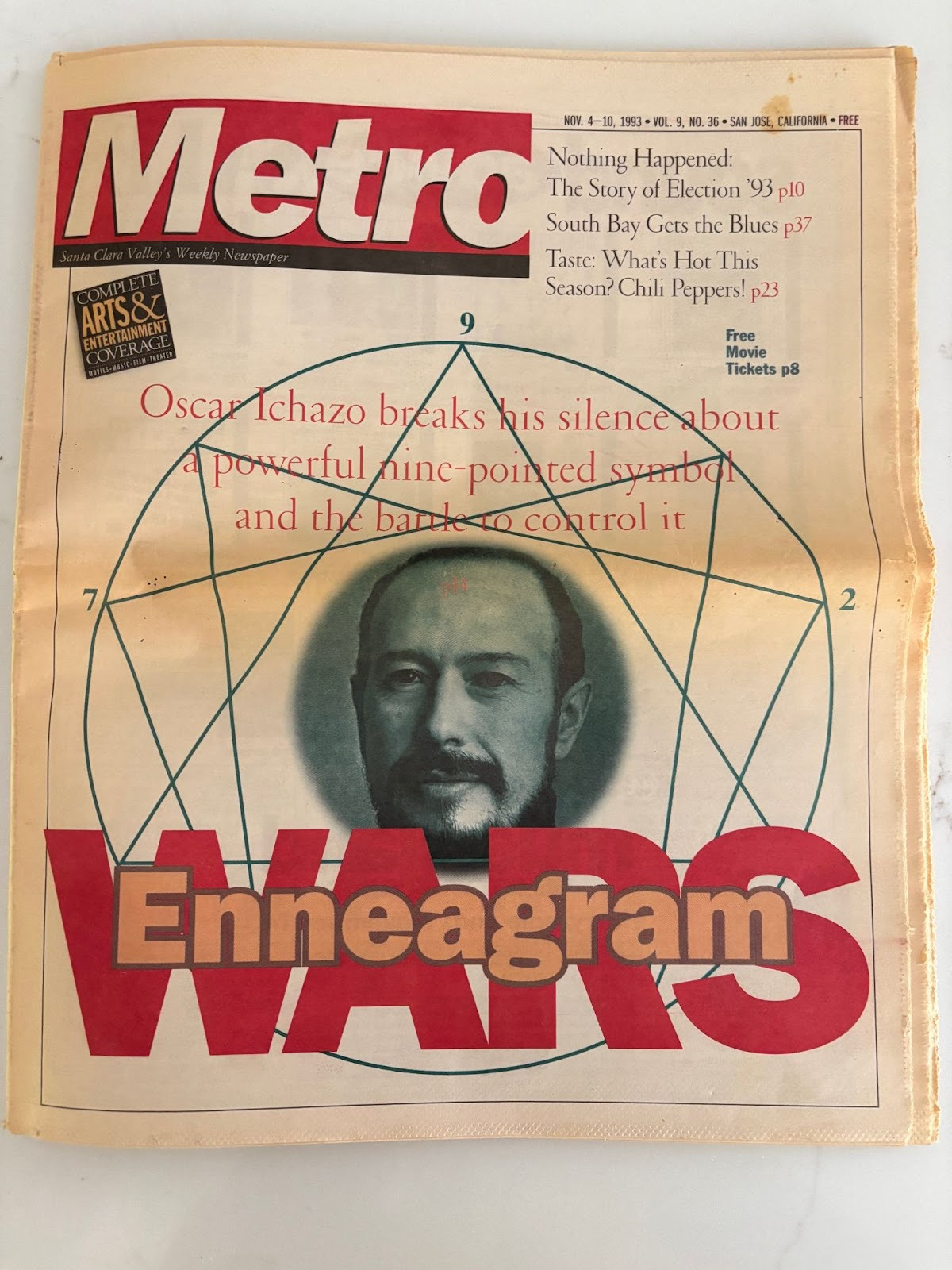 |
| 2024: The Enneagram of Divine Forms, published posthumously by the Arica Institute. Ichazo indicates how the 9 aspects of consciousness were placed on the Enneagram symbol. |  |
Claudio Naranjo
A Chilean in Berkeley, California
(1932-2019)
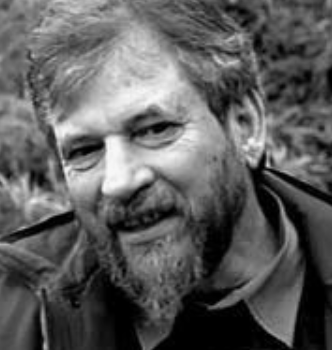
Born in Valparaiso, Chile in 1932, Claudio Naranjo had wide interests in the human condition—an education as a medical doctor of psychiatry at the University of Chile, academic credentials in Western psychometrics (fellowships at Harvard and Stanford Universities), alongside personal experience with Gurdjieff’s work, Sufism, and psychedelic exploration.
Naranjo acquired his knowledge through:
- Study of Gurdjieff and Sufism
- Ichazo’s first teaching to North American visitors in Arica, Chile followed by automatic handwriting
- Mainstream western psychology and psychometrics
Very few people in the 1970s could have accomplished what Naranjo did by translating Ichazo’s teachings into language that mainstream psychology could understand. Figure 1.6 provides a snapshot of Naranjo’s background and Figure 1.7 the sources we examined.
Claudio Naranjo travelled between Berkeley, California, Santiago, Chile, and Western Europe teaching therapists and students alike. He died in Berkeley California in 2019.
Figure 1.6 Snapshot of Claudio Naranjo’s Academic and Esoteric Background
| The Mainstream •University of Chile, medical degree in Psychiatry (1959) •Harvard University, Fulbright Scholarship, Studies with Gordon Allport and Henry Murray (1963) •University of Illinois, Studies with Raymond Cattell (1963) •Stanford University, Guggenheim Fellowship, Esalen, Studies with Fritz Perls (1965-1966) •U.C. Berkeley, Institute for Personality Assessment and Research (1967) •Stanford Research Institute, then Berkeley became home (1968) The Esoteric •Research on psychedelics (although part of the mainstream in the 1960s) •Study of Gurdjieff and Sufism (1960s) •Death of his only child and intent to set up an Esalen Institute for the exploring of human potential in Chile, which led him to Ichazo from whom he learned the Enneagram (1970) |
Although Naranjo taught his first Seekers of the Truth workshop the Summer of 1971 in Berkeley, California, his first writings were published in the 1990’s due to the promise he made to Ichazo not to publicly write about the Enneagram.
Figure 1.7 Naranjo Key Sources
| Enneatype Structures: Self-Analysis for the Seeker, 1990 |  |
| The Enneagram and Society: Healing the Soul to Heal the World, 1995 |  |
| 2003 IEA Conference Keynote Address “The Psychology of Enneatypes as a Catalyst for Change in Education and Society” | 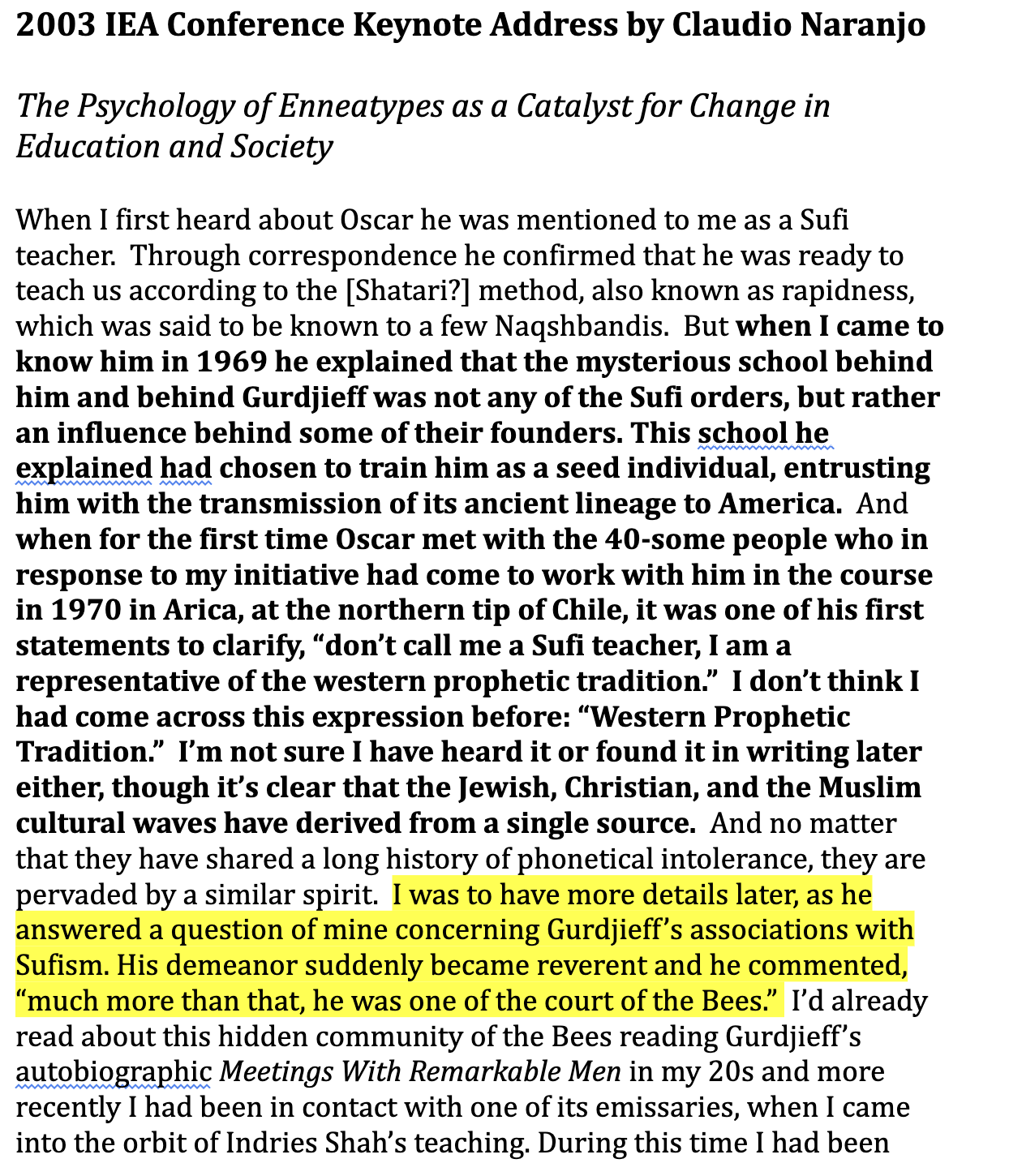 |
Insights from Gurdjieff, A Seeker After Truth
Gurdjieff was focused on universal laws of process, what laws created the universe, and how they have unfolded over billions of years. Although he refers to essence and personality, and he twice mentions 27 personality types, the focus of his work was the how and why of everything—cosmic laws of creation and process.
Because these laws start with singularity and also extend to the development of human consciousness, process is important to the Enneagram of Personality. While it is useful to see our personality type or our mechanical unconscious nature (the what) we also have to consider why we suffer and how we develop our consciousness through the evolution of 7 centers within our body, and how we ultimately relieve our suffering.
For the purpose of The Objective Enneagram of Personality, we present four insights from Gurdjieff.
(1) The Intentional Writing for Millennia. Beelzebub’s Tales, Gurdjieff’s first book in his three series, requires active engagement, continuous effort to remain present, and, according to Gurdjieff, at least three returns to passages to fathom the gist of his writings. Gurdjieff used this method of diving below the surface to ensure longevity so that readers will gain experiential understanding of the text, not only intellectual knowledge.
(2) The Core Teaching: Awakening from the Subjective Dream. At the heart of Gurdjieff’s teaching lies a radical diagnosis, that we live in an upside-down, subjective world, and we are asleep within it. Ordinary human consciousness operates mechanically, automatically, and reactively. We believe we see reality, but what we actually see is filtered through the lens of personality, the coping mechanism we developed to manage the separation from wholeness that occurs in very early childhood (if not the first few days of life).
(3) Objective Science: Knowing Beyond Time and Place. Objective science does not mean “better empirical research” or “more rigorous experimentation.” It refers to something categorically different—the understanding of how and why everything exists and functions as it does. The objectivity derives from the assertion that a single, fractal pattern—the diatonic octave—underpins everything existing. This is not simply the musical scale (do-re-mi-fa-so-la-ti-do), though it manifests there. It is the pattern by which any process unfolds from potential to completion. It can be seen that the Enneagram is a formal mathematical data science.
(4) The Contemporary Scientific Limitation. Western science in 2026 does not entirely understand what consciousness is. Each scientist observes through the lens of their personality type, which is itself an unconscious compensatory mechanism. Thus, a scientist perceives a specific sliver of how things work, not just because of modern, albeit limited instruments, and societal-cultural assumptions, but also because of our personal and restricted consciousness. In fact, Gurdjieff brought forward that both heightened consciousness and advancement of measurement, over the next couple of thousands or hundreds of years will allow us to measure and observe consciousness.
More importantly, the reason why Western science struggles understanding consciousness is that its researchers come at the topic from multiple disciplines, without a unifying model of what they are inspecting. Further, they do not know, nor have they experienced that there are four types of attention or consciousness: sleep, waking-sleep or ordinary consciousness (mechanical or drawn), controlled or willful consciousness, and objective consciousness. Even the modern mindfulness movement focuses on ordinary drawn attention.
Western science is a cumulative work, whilst Eastern science is deductive, starting with the whole and deducing the parts. Although Western science does not even class Eastern science as science, a shift towards the formal mathematical data sciences is emerging. There is a recognition that patterns emerge and can be discerned without a biased hypothesis. The Enneagram of Personality is, in fact, a scientific discovery of the mathematical patterns of consciousness.
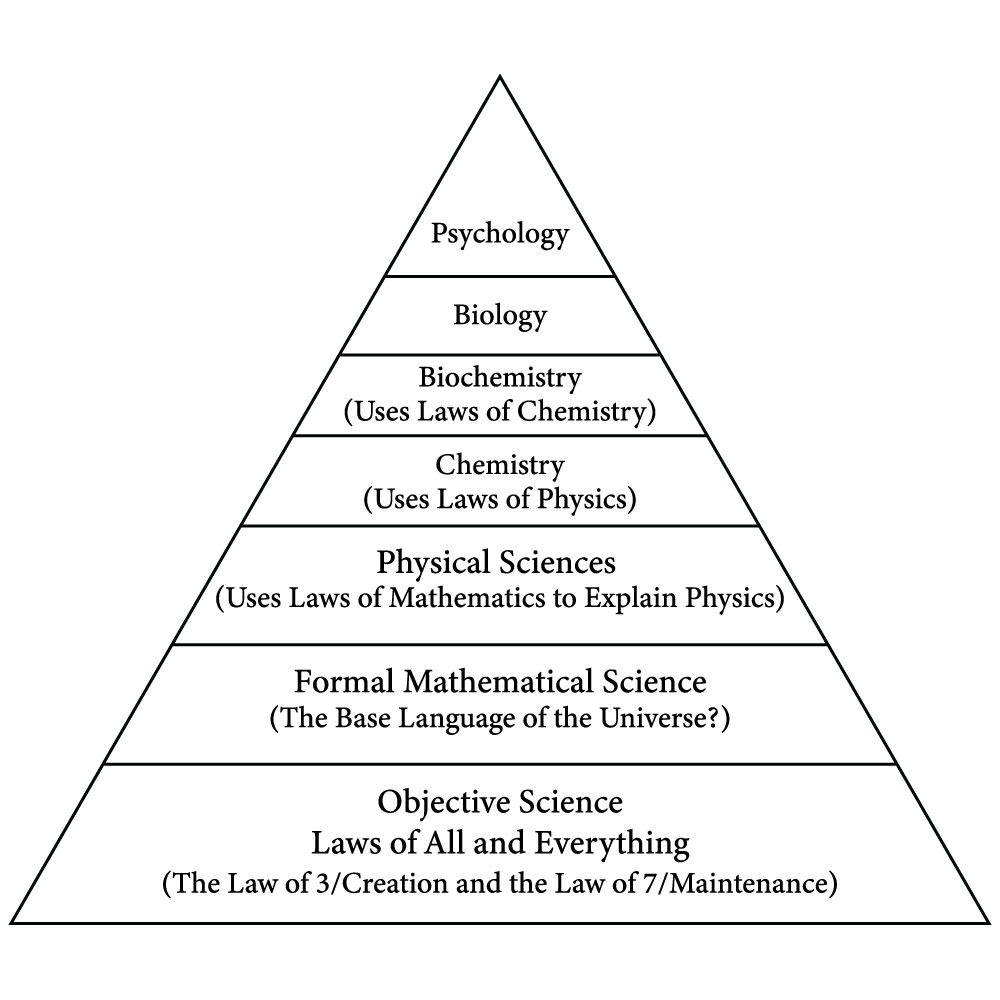
Figure 1.8 summarizes Objective Science and Figure 1.9 illustrates where Objective Science is placed in the Pyramid of Science.
Objective science describes all and everything from the outset. It functions as what contemporary thinkers would call an Abstract Systems Theory, a meta-framework that encompasses all possible subsystems while remaining independent of any particular manifestation. The rigor of objective science also extends to not just answering what or how, which much of Western science does, but should also be able to explain why something happened and why it works that way.
Figure 1.8 Objective Science Defined
| The term “objective science” refers to the how and why of everything. It is objective because it describes the universe as a whole. Other branches of science derive laws by observation related to specific conditions of time, space, measurement, and experimental approach. This is an understanding of how everything is shaped by the diatonic octave (do-re-mi-fa-so-la-ti-do) structure, and the action of the three forces or Law of 3 that are initially separated but recombine through the Law of 7. This science is objective because it transcends every locality of space and time; it is derived from the totality of the universe itself. |
Anyone familiar with the simple pyramid of science understands how mathematical laws inform physics, the laws of physics inform chemistry, the laws of biochemistry inform biology, and biology informs psychology. Objective science places the Laws of 3 and 7 at the base of the pyramid informing mathematical science and so on, all the way up to the social sciences, including psychology and consciousness itself.
Figure 1.9 Objective Science and The Pyramid of Science
We see these takeaways important to the field of western psychology:
- The Law of 3 and 7 within the Diatonic Octave can provide knowledge about the mathematical structure of consciousness.
- The 125 year old field of psychological science can benefit from the emerging field of traditional and indigenous understandings of human suffering. We can cure the cause of suffering, along with treating the symptoms.
- As Psychology and the social sciences are fields more distant from mathematical and physical laws, these fields can accelerate with understanding of objective science at the base of the pyramid of science.
A Possible Connection Between Gurdjieff and Ichazo Knowledge
There are objective reasons to make key connections between Gurdjieff and Ichazo, both of whose knowledge was brought forward in the 1900s.
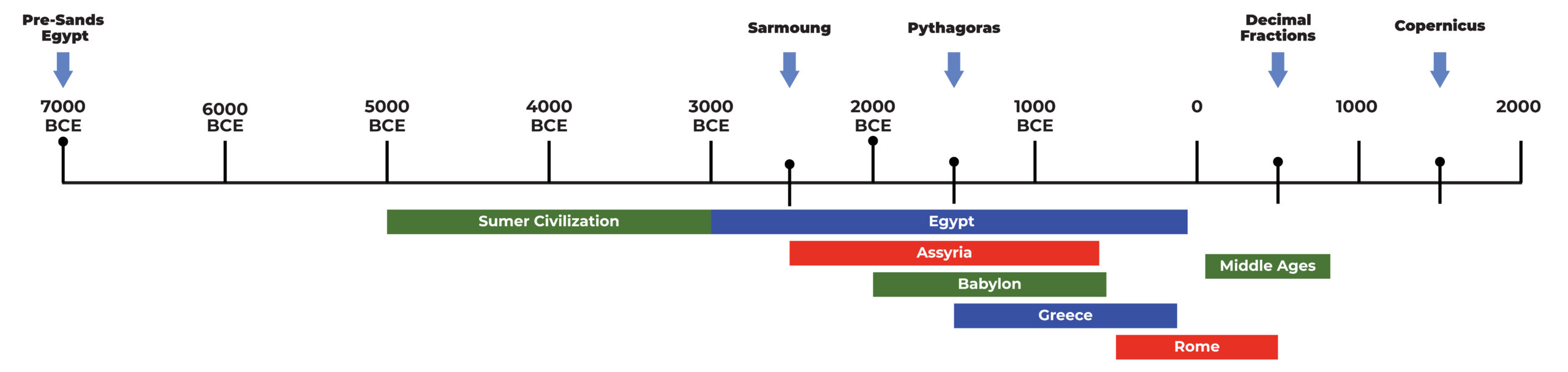
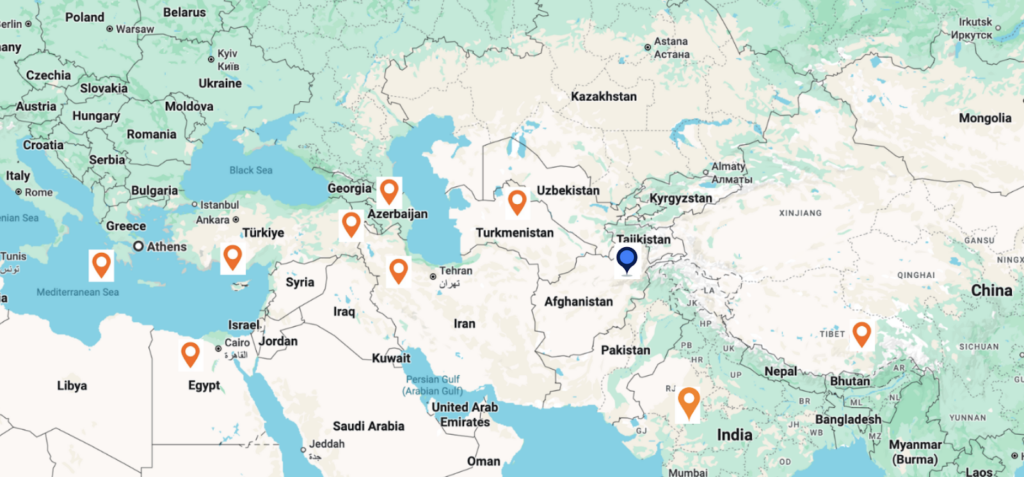
First, there are enough clues laid out by both Gurdjieff and Ichazo that the long-held knowledge of the Enneagram may be linked to the same source. This source is commonly referred to as the Sarmoung Brotherhood. Although we have history dating the Sarmoung back to 2500 BCE as a source of passing on objective knowledge, Gurdjieff also states the knowledge has been transmitted from at least Pre-Sands Egypt, circa 7000 BCE.
In Part 2 we will provide specific mathematical and lawful explanations of how we arrive at 7 centers of attention, memory, learning, and behavior as well as 27 subtypes of personality from the 3 natural and conditioned instincts. In addition, at the core of personality types, Gurdjieff, Ichazo, and Naranjo all acknowledge three types of humans: (1) physical or body center dominant, (2) emotional or heart center dominant, or (3) intellectual or head center dominant.
We constructed a map showing red pins of Gurdjieff’s key travel locations, including mention by Gurdjieff students of a possible location of the Sarmoung Brotherhood in the Hindu Kush mountains of Afghanistan (blue pin).
In his interview with Michael Goldberg, Ichazo speaks of his travels to Asia from 1952 to 1954: “I went three times to the Orient, seeking confirmation of my own studies and realization. I went to Srinagar in Kashmir, where the Salva and Kaula school of tantra originated, then to Rawalpindi, and Peshawar, Kabul.”
We also constructed a map with blue dots indicating Ichazo’s key locations of travel, noting where the Sarmoung Brotherhood may have been located in proximity to the Hindu Kush mountains (red pin).
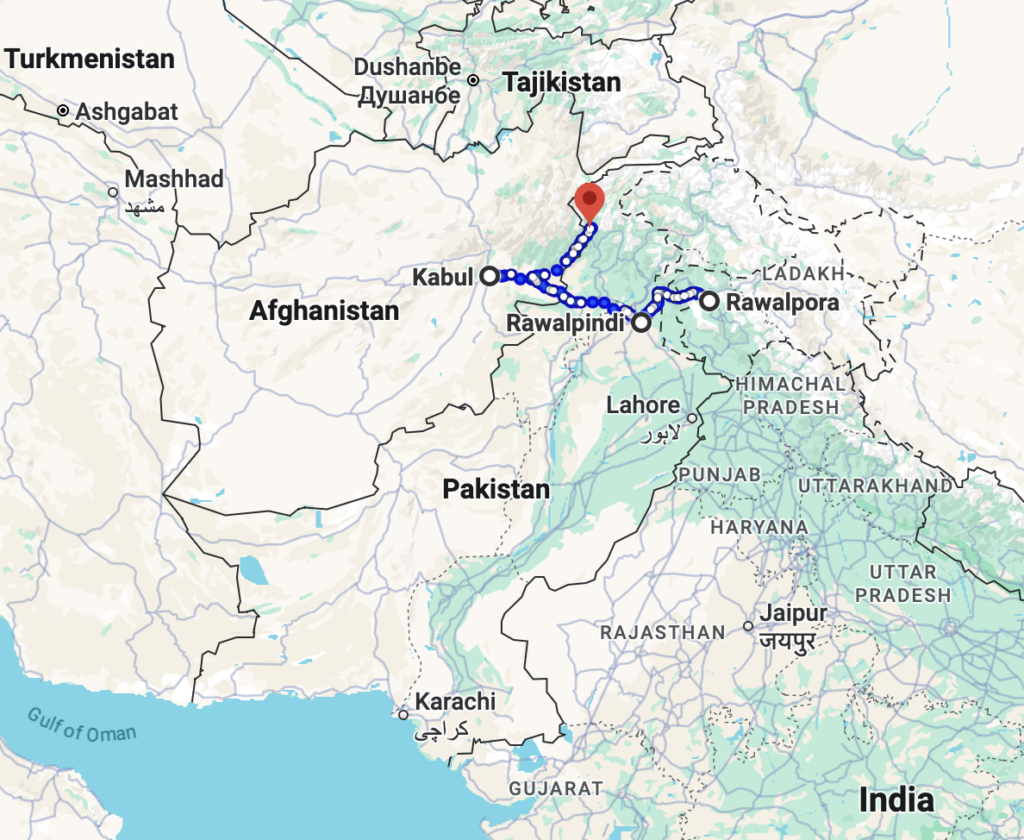

Although the Hindu Kush mountains were mentioned by various Gurdjieff scholars, both Gurdjieff and Ichazo also traveled in Tibet where other Gurdjieff scholars have placed Sarmoung knowledge.
Importantly, whether Gurdjieff or Ichazo were in the same location and at the same Sarmoung Brotherhood, although interesting, this is not important. The Sarmoung may, in fact, be distributed and not location based. Indeed, the Sarmoung may not exist at all as a unified organization. Its prototype, as described by Gurdjieff, was a loose affiliation of like minds who store objective knowledge.
It is also significant that Gurdjieff explicitly states the name Sarmoung in his second series, whereas the Ichazo connection is known indirectly through his communication with Naranjo. But, both Gurdjieff and Ichazo share in common that the source was to remain unknown.
The Challenge of Preservation Across Time
In Figures 1.10 and 1.11 below, the geological record shows shifts in culture, climate, and environment spanning millions of years. Human cultural settlement, even in its most recent phases, covers tens of thousands of years, in which human societies rose and fell, languages appeared and disappeared, civilizations collapsed, and, to our current knowledge, writing and written records were possible only 5,000 years ago.
How does objective knowledge survive across such distances of time?
Through body postures and body movements.
Through symbols.
In parables, song, art, and stories.
In beings with evolved consciousness, objective reasoning, and direct knowing.
Through the verification within your own awakened consciousness.
By schools of consciousness preserving knowledge outside the mainstream of politics and power.
The Sarmoung Brotherhood represents such a function of preservation outside the mainstream. Sarmoung translates as “the bees,” and the symbolism is quite precise. Bees gather nectar from diverse sources, transform it through their labor, and produce honey that nourishes and preserves. In the same way, an esoteric school gathers knowledge from various traditions, maintains it through disciplined and internally verified practice, and transmits it in forms that preserve essential truth about the nature of the universe and consciousness.
Indeed, the Sarmoung would have stored knowledge from Pre-Sands Egypt, from the legend of Hermes Trismegistus, and from Ancient Egypt itself.
Figure 1.10 Timeline of Enneagram Objective Knowledge Key Markers Pre-Sands Egypt to 2,000
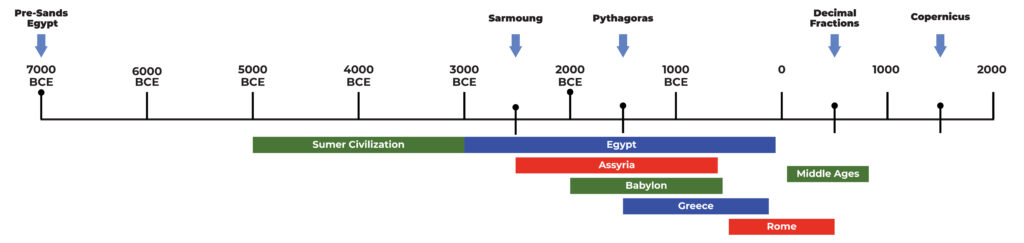
Figure 1.10 Legend: Objective Knowledge Key Markers Indicated by Blue Arrows
| Objective Knowledge Key Marker | Date | Past Since 2,000 CE |
|---|---|---|
| Pre-Sands Egypt Very early agriculture, early societies, knowledge of the Laws of 3 and 7 | 7000 BCE | 9,000 years ago |
| Sarmoung Storage of objective knowledge | 2500 BCE | 4,500 years ago |
| Pythagoras Brought knowledge of the diatonic octave from Egypt to Greece | 1500 BCE | 3,600 years ago |
| Decimal Fractions Persian mathematicians revealed the nature of decimal fractions, indicating .142857 an Enneagram symbol coincidence | 500 CE | 1,500 years ago |
| Copernicus Start of modern science | 1500 CE | 500 years ago |
Figure 1.11 How Conscious Were Homo Sapiens Over the Last 350,000 years?

Figure 1.11 Legend: 350,000 years of Homo Sapiens, More Than 10,000 years of Agriculture, Pre-Sands Egypt 7,000 to 10,000 years ago.
| Bottom Bar: Geological Shifts | Human Development | Top Bar: Advancements of Tools and Agriculture |
|---|---|---|
| Miocene—Optimal climate, mammals flourished | Early hominids | Cause and effect thinking active and the emergence of primitive tools |
| Pliocene—Cooling and ice sheets | Australopithecines Earliest records of Homo erectus, 2 million years ago, end of the Pliocene | Stone tools emerging |
| Pleistocene—Ice Age, drastic climate change | Earliest record of Homo sapiens, 350,000 years ago | Hunting and gathering |
| Holocene—period of more stable climate | Homo Sapiens | Mesolithic—early agriculture Neolithic—agriculture Bronze Age—Metal tools, weapons Iron Age—Iron tools, weapons |
From Vision to Verification: Ichazo’s Life Work
Following his return from Central Asia in 1956, Ichazo devoted the next 14 years (from age 26 to 40) to what is called objective verification. He rigorously tested the knowledge received in his “higher knowledge vision” with observable reality, with ancient and European philosophy, with mathematical laws, and with the lived experience of consciousness. During this period, Ichazo reports organizing the early roots of the Arica Institute and verifying his vision of the archangel Metatron with several small groups.
Figure 1.12 summarizes key moments in Ichazo’s life that shaped receiving his higher knowledge vision and subsequent verification, first in South America, then throughout his life at the Arica School. He founded this institute to teach Protoanalysis and Integral Philosophy. (The 9 enneagons were part of this philosophy.)
Figure 1.12 Key Takeaways Ichazo from 1949 to 1975
| • From a very early age, Ichazo practiced controlled or willful attention which awakened his consciousness. •. At age 19, Ichazo was gifted the books by Russian philosopher P.D. Ouspensky. •. He drew from philosophy and mathematics arising out of Egypt, from the Chaldeon Oracles, from the 9 enneads of Greek philosopher Plotinus, and the Dao. •. At age 24, Ichazo states that knowledge of the 108 enneagons, including the 9 ego fixations, was a discovery through years of study combined with a direct knowing from a vision delivered by archangel Metatron. • From ages 24 to 26, Ichazo traveled to Central Asia and Afghanistan to confirm his knowledge. •. At 26, Ichazo founded the Arica Institute in Arica, Chile. Until he was 40, he taught and verified his knowledge by leading small groups. •. At 40, he launched formal teaching of the enneagons to a group from North America. This was 1970. •. Most of Ichazo’s life was devoted to the verification of his teachings on Integral Philosophy. The Enneagram was one piece of this philosophy. •. Ichazo settled in Hana, Maui, and established the Arica Institute on this Hawaiian island. |
“I didn’t receive the enneagons from anybody. They came to me, 108 in all, as in a vision,
Oscar Ichazo
showing their internal relationships with complete clarity, in 1954 in Santiago, Chile.
Since then, they have never required any correction or change.
I never considered [them] my invention, but a discovery as scientific discoveries are,
with exactly the same qualifications of being verifiable and objective.”
Quoted by Theology Think Tank from the Original Letter to the Community
Ichazo’s commitment to verification distinguishes him from visionaries or channellers. He did not report what came to him and expect acceptance based on authority or charisma. Instead, he subjected his direct knowing to the most demanding test possible: Does it correspond to objective reality? Can others verify these patterns in their own experience? Do the enneagons reveal actual structure, or merely interesting concepts?
Only after 14 years of this verification process did Ichazo begin formal teaching of his integral philosophy. In 1970, at age 40, he conducted the first Arica training for North Americans in Chile. John Lilly, M.D. and Joseph Hart documented this training in a 1975 publication. Claudio Naranjo attended the training, setting in motion, the Berkeley, California Summer of 1971 teachings in his backyard, the transmission of the Enneagram to the Western psychological community.
Honoring the Source: The 2003 Naranjo International Enneagram Conference Keynote
By 2003, the Enneagram had become a global phenomenon, with thousands of teachers and millions of students worldwide. At the International Enneagram Association conference that year, Naranjo delivered a keynote celebrating this spread while also expressing concern about the quality of the Enneagram’s original transmission.
In that speech, Naranjo crucially stated, “Ichazo answered a question of mine concerning Gurdjieff’s associations with Sufism. Ichazo’s demeanor suddenly became reverent, and he commented, ‘Much more than that, he was one of the court of the Bees’.”
This statement, made decades after the original conversation, serves two purposes.
- It acknowledged the lineage connecting Gurdjieff, the Sarmoung Brotherhood, and Ichazo’s own work.
- It connected the Enneagram’s origins beyond any individual teacher (including Gurdjieff and Ichazo), reaching back to ancient preservation of objective knowledge.
Part 1 Summary: Convergence in Ancient Objective Enneagram Knowledge
In Part 1, we:
| (1) Highlighted key pieces of information in the original sources of Enneagram knowledge brought forward by Gurdjieff, Ichazo, and Naranjo. (2) Distinguished between the Enneagram of process (diatonic octave) and the Enneagram of content (the specific nature of our limited consciousness in 9 fixations and personality patterns). (3) Re-established the ancient origins of objective knowledge of the Enneagram and the meaning of objective science, along with the recognition that the Enneagram of Personality and the Enneagram of Process are scientific discoveries that can be studied as a Formal Mathematical Data Science. |
In Part 2, we will:
- We will summarize Gurdjieff’s scholarly advancements to grasp the significance of wholeness in 7, 3, and 9 in the development of human consciousness
- We will restore objective knowledge about the mathematical symbols and the mathematical and physical structure of the Enneagram of Personality, and
- We will reveal the physical structure of how we get from 1 to 3 to 9 to 27 personality types.
Let’s keep alive both the Objective Enneagram of Personality (content) and the Objective Enneagram of creation and maintenance (process), to receive, as intended, this Enneagram knowledge objectively, to verify Enneagram knowledge within our own experience, and to transmit it undistorted to those who follow.